Every Desktop Space gets its own live theme
Swipe from one Space to the next and you swipe from a quasar to a night beach to a marbling bath. A theme is one file: a Metal kernel on the GPU or a Zig file on the CPU.
Drop it on a Space from the menu bar and Argus compiles it on the spot; save an edit and it reloads in a second. No engine, no assets: a pixel grid, a clock and a frame budget. Argus draws only the Spaces you can see.
Themes are native code. Only run themes you trust.
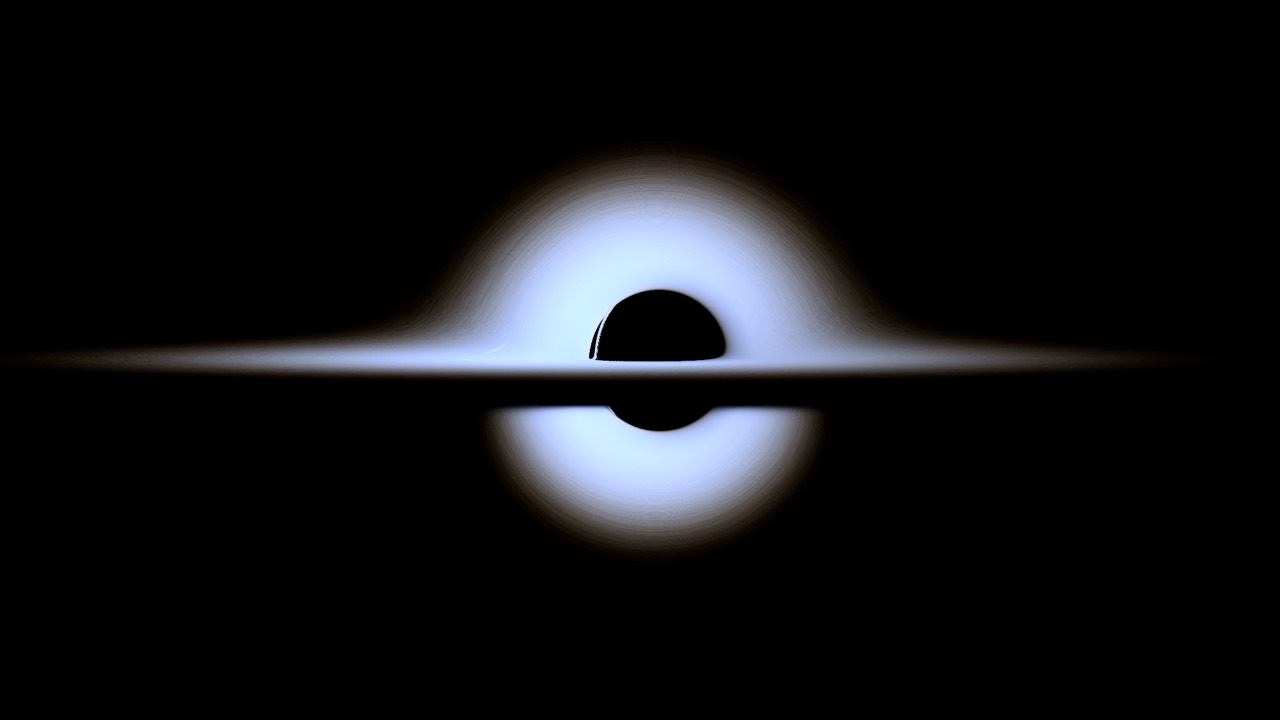 Cygnus A in 4K at 60 FPS on YouTube
One line on macOS, from source on Linux
macOS
Apple siliconcurl -fsSL https://raw.githubusercontent.com/gke0op/argus/main/ install.sh | sh
Downloads the latest release, checks its SHA-256, installs it to ~/Applications/Argus and opens it. Run it again to update. The app isn’t notarized: read the script or use the zip.
Then click the eye in the menu bar and drop a theme on a Space.
Linux
experimental · X11sudo apt install git make curl git clone https://github.com/gke0op/argus.git && cd argus make zig # the pinned Zig 0.17.0, into .toolchain/ make linux THEME=themes/Cygnus_A.zig # or THEME=themes/cpu/Tutorial_Tides.zig ./argus-linux # Ctrl+C or kill to stop
One static Zig binary, no libc or X libraries, that draws one theme as your X11 desktop. Tested on Ubuntu 24.04, arm64 and x86_64. Metal themes need a CPU port first; Tutorial Tides has one.
MIT licence. Build from source on a Mac: make zig && make run.
A benchmark where the answer is a wallpaper
Give a model BENCHMARK.md and one sentence. It writes one Zig 0.17.0 file that simulates something real, and eight gates grade it. A pass is also a wallpaper.
The eight gates
- 1it compiles
- 2makes one allocation
- 3survives a 320×200 watchdog
- 4respects the row stride
- 5writes opaque pixels
- 6produces no NaN
- 7moves visibly
- 8stays under 16.7 ms a frame on one CPU core
- models
- 6
- runs
- 34
- pass all eight gates
- 31
Cross-model leaderboard 2026-10-19
| Claude Opus 5.5 | zero-shot | 3/3 | 8 | 2.19 (1.89–6.63) | Silver | none | - |
| Claude Opus 5.5 | agentic | 3/3 | 8 | 2.93 (2.23–4.27) | Silver | none | 1 |
| Claude Sonnet 5.5 | zero-shot | 3/3 | 8 | 4.19 (2.74–4.46) | Bronze | none | - |
| Claude Sonnet 5.5 | agentic | 3/3 | 8 | 2.44 (2.41–4.91) | Silver | none | 2 (1–2) |
| Claude Haiku 5.5 | zero-shot | 2/3 | 8 (0–8) | 1.40 (0.83–1.96)* | Gold* | r1: compile error (expected type 'u32', found 'usize') | - |
| Claude Haiku 5.5 | agentic | 3/3 | 8 | 4.69 (2.84–6.50) | Bronze | none | 2 (1–2) |
| Claude Fable 5.1 | zero-shot | 3/3 | 8 | 3.77 (3.31–5.42) | Silver | none | - |
| Claude Fable 5.1 | agentic | 3/3 | 8 | 3.84 (1.85–4.24) | Silver | none | 1 |
| Gemini 3.8 Flash | zero-shot | 3/3 | 8 | 2.18 (1.26–11.57) | Silver | none | - |
| Gemini 3.8 Flash | agentic | 3/3 | 8 | 6.58 (1.23–11.57) | Bronze | none | 1 (1–2) |
| Gemini 4 Argon | zero-shot | 1/3 | 0 (0–8) | 3.78 | Silver | r1: compile error (expected type 'u32', found 'usize'); r3: compile error (name shadows primitive 'u01') | - |
| Gemini 4 Argon | agentic | 1/1† | 8 | 2.31 | Silver | none | 2 |
Notes: Argon grades itself; marks, quotas and frame times
- Argon grades itself: Argon (Gemini) wrote ARGUS-BENCH and the theme SDK.
- † One agentic Argon run, not three: the Gemini quota ran out (the cap was set before any results).
- * Haiku’s two zero-shot passes are mostly the skeleton. The gates check that a theme runs, not what it simulates.
- Frame times vary up to 9× within one model, so this table doesn’t rank speed; the machine was loaded (about 30% slow). Methods and every run.
- The figures: 6 models, zero-shot and agentic; 34 runs, all rescored on one machine; 31 pass all eight gates, and the 3 that fail are zero-shot compile errors.
One file per theme, three ways to run it here
Themes are single files
A .metal theme is a compute kernel over every pixel, with optional state kept between frames. A .zig theme is a State with init, step and draw: one allocation, then none.
Metal → WGSL on WebGPU
Each of the nine Metal themes has a one-to-one WGSL translation with the app’s frame semantics. At frame 120, every pixel is within 3/255 of Metal’s.
Zig → wasm on Workers
Zig themes compile unchanged to SIMD128 wasm and split rows across Worker threads. The 8 gates are the native harness’s own code, and Tides’ final frame is bit-identical to native.
Cygnus A’s physics, checked · what this page can’t match yet
Kerr light paths, checked
The black hole’s Metal kernels are ported to WGSL one for one, and its Zig runs as a 79 KB wasm module. 99.996% of pixels match the app’s frame, none by more than 2 levels, and the shadow’s edge matches Bardeen’s analytic curve to 1.79e-5 M.
In the app, 49 physics claims sit in a test ledger, all passing. What is computed and what is chosen.
What this page can’t match yet
Full screen at 120 Hz, Roulette Chrome and Night Tide run at 105–120 fps and Lizard Island near 100, close to the 8.33 ms budget; their simulations keep the 30 Hz tick. Tides in wasm takes 17–18 ms a frame against 15.3 ms natively, so here it fails Gate 8. Measured in Chrome 157 on an Apple M3.
The readout in the corner shows your machine’s numbers: frames drawn against the display’s refresh.